
Dining
This Findlay Market vintage shop is throwing a birthday bash with deals, DJs and more
By Evan Fields
Advertisement · Why this ad?
Mark graduated from Cleveland State University with a degree in Business Journalism. He brings over eight years of experience from local business journals, where he specialized in small business development and economic growth in the region.
More from Mark →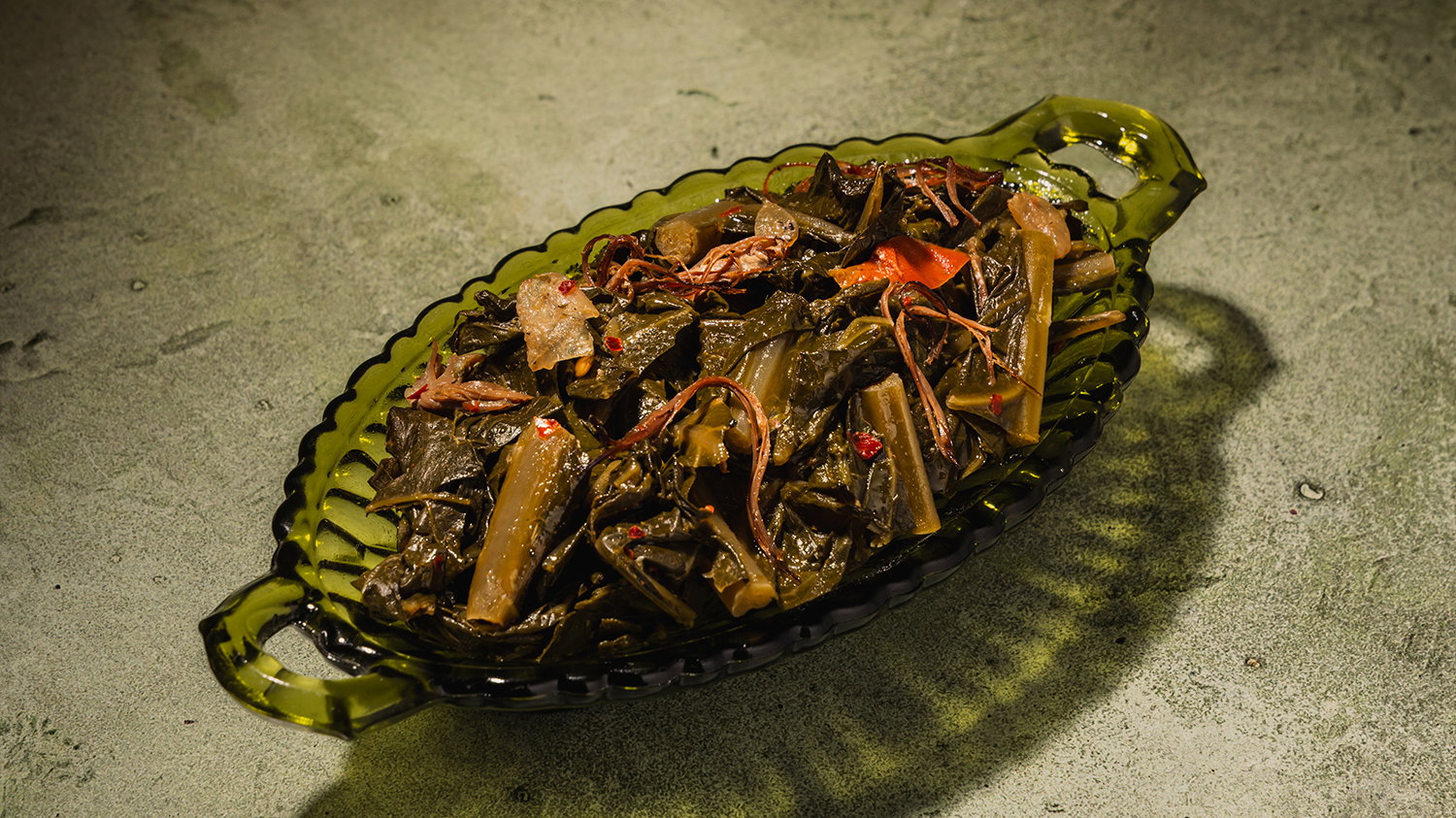
Collard greens from The Night KapPhotograph by Hailey Bollinger America’s reverence around collards often gets flattened into a simple origin story, but the history is more layered. Collards are sometimes mistakenly described as a food first cultivated during slavery. The plant itself dates back thousands of years to Eurasia and belongs to the same Brassica family as kale and cabbage. Culinary historian Michael Twitty notes in his blog, Afroculinaria, that the “first documentation available thus far” linking Southern Blacks with collards appears in 1781, when Continental Army Captain William Feltman traveled through Hanover County, Virginia, and observed that “The Negroes here raise great quantities of snaps and collerds [sic] they have no cabbages here.” Enslaved people turned limited rations into year-round sustenance by growing collard patches of their own. Low and slow cooking with lard and fat meat tempered bitterness and stretched flavor through the pot. What began as survival en
By Evan Fields

By Julia Thompson

By Omar Ali
By Laura Kim